
Quebec Researchers at EECERA 2026: Reflections from Madeira
Posted 22nd October 2026
Members from Qualité des contexts éducatifs de la petite enfance research team share how a week in Madeira echoed Quebec’s way of making sense of educational quality
Guest post by Alexandra Paquette
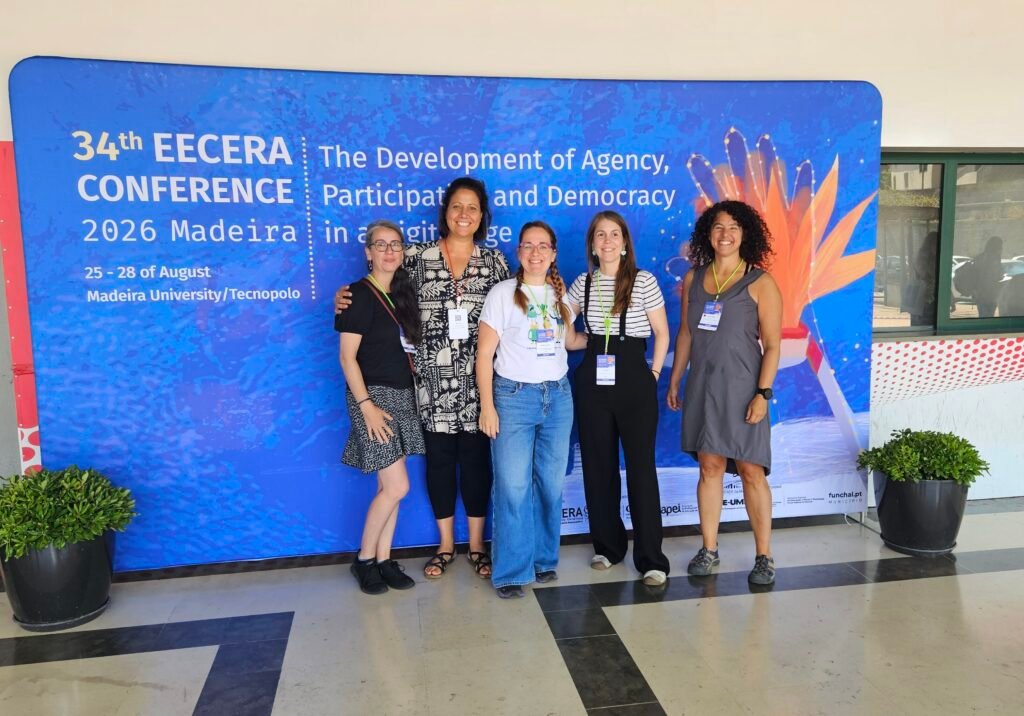
The 34th Annual Conference of the European Early Childhood Education Research Association (EECERA) brought together nearly 800 participants in Madeira, Portugal, under the theme The Development of Agency, Participation and Democracy in a Digital Age. Our delegation came from Quebec, the only majority French-speaking province of Canada, and included members of the research team Qualité des contextes éducatifs de la petite enfance: Lise Lemay, Joanne Lehrer, Stéphanie Duval, Ariane Fiset and Alexandra Paquette. Among the participants, we were happy to recognise many colleagues from other Quebec universities, as well as Véronique Pelletier from the Association québécoise des CPE, and to meet again our international partners from the PRAMATER project, the GIRAF group and the international network of researchers interested in home-based childcare (HBCC Network). Meeting so many Quebec colleagues so far from home created an amusing jet-set feeling, and conversations over lunch or by the sea often turned to research projects, grant applications and, of course, the order of authors.
Coming from Quebec means bringing a particular story. Our network of educational childcare services was born from the 1997 family policy, which created the centres for early childhood and offered places at a reduced parental contribution, at first 5$ a day. It was then the only publicly funded network with a universal aim in North America. It has grown from about 82,000 places in 1998 to almost 310,000 in 2025, and since 2021, it has served as the model for the 10$-a-day services that the federal government is funding across Canada. Non-profit centres, for-profit daycares and home-based childcare coexist under the same law. Home-based childcare offers almost a quarter of the places, yet no overall evaluation of its quality has been conducted since 2003. In Montreal, where a third of the population is made up of immigrants, families and educators also bring a wide variety of views on childhood, education and on quality.
Quebec research stands at a crossroads between the North American developmental tradition, from which most standardised assessment tools come, and European work that has questioned the very concept of quality. Most members of our team were first trained in developmental psychology, and the French translation of Beyond Quality by Dahlberg, Moss and Pence started a long shift in our thinking. Rather than choosing between measuring quality and making sense of it, we came to propose a hybrid approach in which the two traditions talk to each other. Following Pastori and Pagani (2017), data from standardised tools open reflective dialogues with educators, and these dialogues in turn help give meaning to the data and guide action. The COVID-19 pandemic then sealed another shift, from research conducted on educators to research conducted for and with them. We tell this story in Construire le sens de la qualité éducative en petite enfance (Bigras & Lemay, 2025), forthcoming in English with Routledge as Making Sense of Educational Quality in Early Childhood Education and Care.
Carrying this story to Madeira also meant carrying it into another language. We read, think and write mostly in French, so presenting in English asks us to translate not only words but also concepts that carry a specific meaning in Quebec. Some poster conversations stayed on the definition of a single term, a reminder that words such as “educational childcare” do not travel easily between languages and systems.
Perhaps the most important lesson from our time in Madeira was the value of connection. At the opening, Chris Pascal invited participants to talk each day with five people they had never met before, and Lise noted that this was the edition in which she interacted with the greatest diversity of people. We had a rich discussion with Luis Alberto Ribeiro, president of the Portuguese Association of Early Childhood Education Professionals (APEI), about how the association supports professionals on the mainland and on the islands, and we want to acknowledge APEI’s work in translating several books into Portuguese. Ferre Laevers kindly offered Lise a copy of the third edition of A Process-Oriented Monitoring System for the Early Years.
For several members of our team, presenting research was a highlight of the conference. Joanne Lehrer chaired a symposium presenting results from PRAMATER, a Quebec-France project on success in kindergarten from the perspectives of children, professionals and parents. Lise Lemay chaired the self-organised symposium Rethinking quality, professional development, and systemic support in home-based educational childcare services: situated and comparative perspectives, where she presented a study conducted with the Association québécoise des CPE on how Quebec’s coordinating offices assess educational quality in home-based childcare. Stéphanie Duval and Gabriel Kappeler presented their work on executive functions during pretend play with unplugged digital materials. We were delighted that EECERA’s Facebook coverage featured the home-based childcare poster presented by Alexandra. For Ariane, the poster session was brief but impactful, and she found it meaningful to see her work resonate with an international audience.
One recurring challenge of the conference was deciding which sessions to attend. With more than twenty simultaneous symposiums during some time slots, participants often had to choose between presentations that were equally appealing. Conversations with colleagues revealed several strategies for navigating these choices: following a research topic of current interest, discovering unfamiliar methodologies, learning about different cultural contexts, an interest in exploring methodological tools that are not commonly used in one’s own work, listening to researchers whose work has shaped their own thinking. EECERA offers two submission formats: individual papers, which are grouped into thematic sessions by the scientific committee, and self-organised symposia (SOS), where teams submit a coordinated set of presentations. The session format itself can influence participants’ choices when selecting which symposiums to attend.
A particularly memorable aspect of the conference was the attention given to digital technologies and artificial intelligence in children’s lives. Keynote speakers invited participants to move beyond simplistic debates about whether technology is good or bad for children. Instead, they encouraged us to consider how children can develop critical perspectives, meaningful participation, and agency in an increasingly digital world, where digital and non-digital experiences are deeply interconnected. These questions are alive in Quebec too. Andréanne Gagné, from Université Laval, recently reminded families in a radio interview that simple phone and computer settings can reduce notifications during family time, and Patrick Charland, from UQAM, has called for artificial intelligence literacy in schools.
Another source of inspiration came from the Special Interest Groups (SIGs). These communities provide opportunities for ongoing collaboration that extend beyond the annual conference. For a second year, Lise co-convened the SIG on home-based childcare, whose members organised a self-organised symposium showing similar challenges across very different cultural contexts. Joanne, as she has done for many years, took part in the SIGs on transitions and on working with parents and families, and also joined the meetings on professionalism and on young children’s perspectives.
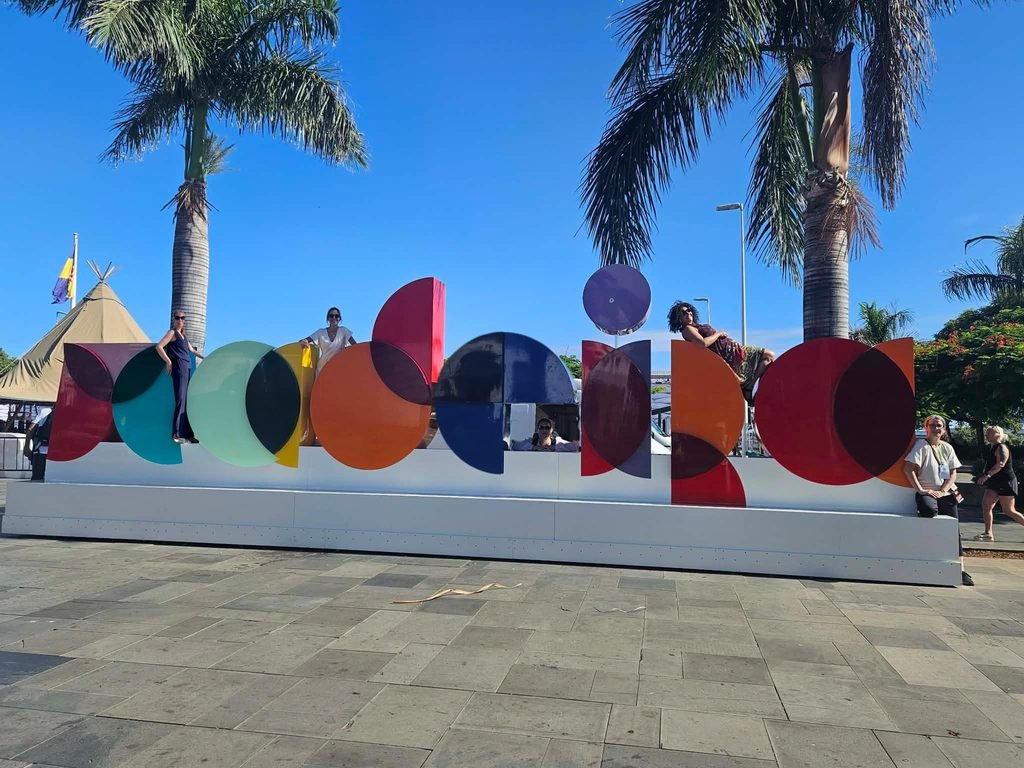
We were especially appreciative of the unique experience offered by our host destination, which became a place of development and learning. The breathtaking scenery provided countless opportunities to unwind, swim in the sea, and enjoy walks and hikes in a truly enchanting setting. The welcome reception in a park with local musicians and the traditional gala dinner with Madeiran food, songs and dances showed us the warmth of the people of the island. As early childhood researchers, we could not help looking at the island through children’s eyes: shaded playgrounds under old trees, a small library on the beach, lizards everywhere, and road signs that make children visible in public space.
One evening, part of our group joined a sunset cruise along the coast. Seeing dolphins swim freely in their natural environment was a moment none of us will forget. We let ourselves be touched and moved, fully aware of what keeps us close to childhood: wonder, curiosity, and the ability to stop and look at what appears. The conference invited us to think about children’s agency in a digital age, and Madeira reminded us that this agency also grows through children’s relationship with nature and interconnectedness. The world we hope to share with children depends on how we care for it today.
We bring these meanings back to Quebec to continue the conversation with educators, families and children: quality built with the people who live it, new partners, and agency in a digital world and in nature. See you in Zagreb in 2027!
If you’re interested in this, you may also like:
Lemay, L., Lemire, J., Paquette, A., Paquette, N., Bouchard, C., & Bigras, N. (2026). How reliable and valid is measuring interaction quality in Quebec’s home-based childcare with the Classroom Assessment Scoring System Toddler? European Early Childhood Education Research Journal, 1–18. https://doi.org/10.1080/1350293X.2026.2676850
EECERA 2026 resources, including the book of abstracts and keynote recordings.
About the author
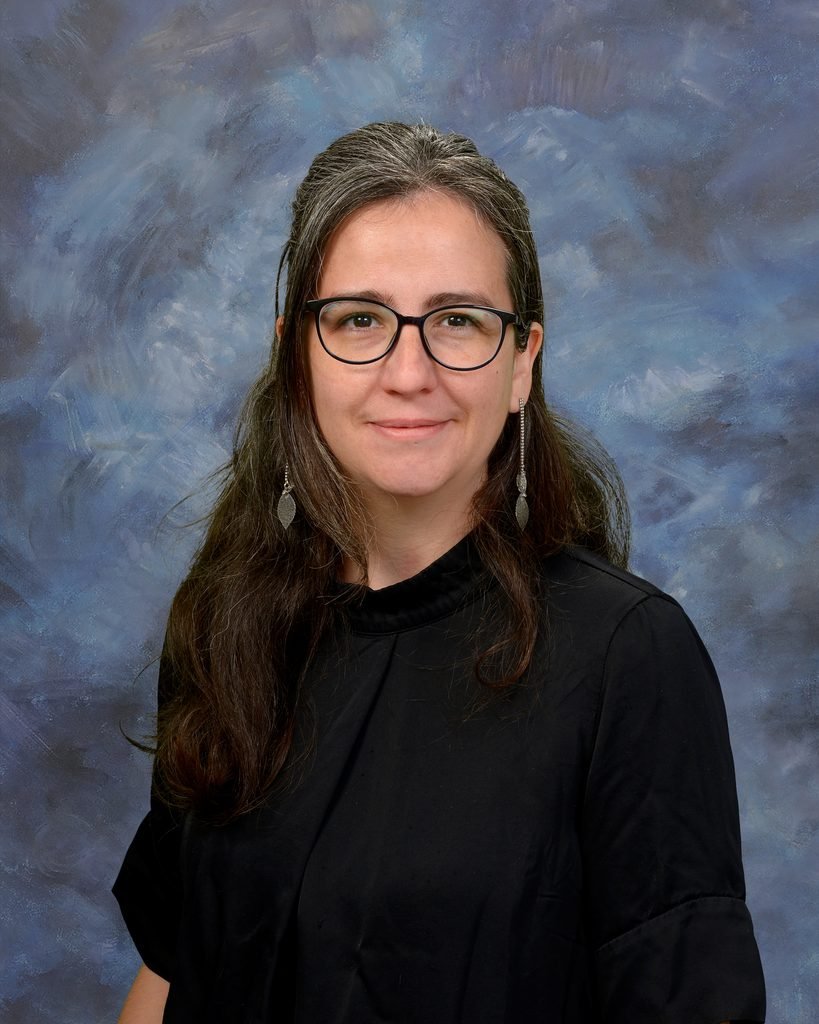
Alexandra Paquette is a research professional in early childhood education in Quebec, Canada. Her work focuses on educational quality, professional development, and early childhood services. She collaborates on several research projects examining professional practices, children’s perspectives, and quality improvement in diverse early childhood settings.
** An initial version of this text was generated using Copilot AI for the purpose of summarizing and translating a French-language document.