
The Three Seconds After a Mistake: What kind of digital support helps five-year-olds become agents of their own learning?
Posted 23rd August 2026
Guest post by Maija Kulinska and Liga Aboltina
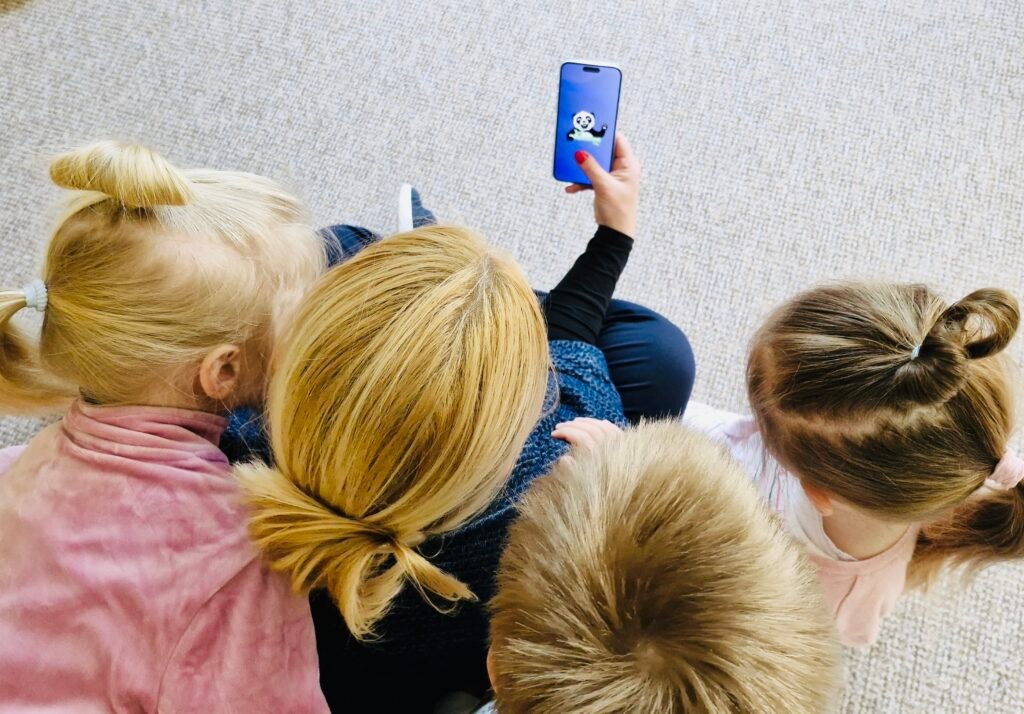
What kind of digital support helps five-year-olds become genuine agents of their own learning — and when does “helpful” technology quietly take the thinking away from the child? A randomised study of 100 children in Latvia offers evidence, and some of it surprised us.
The three seconds after a mistake
A five-year-old taps an answer on a tablet. It is wrong. What happens in the next three seconds?
In one version of the learning environment, nothing – the answer is submitted and the activity moves on. In the other, the child receives corrective feedback and may try again.
I remember watching a child in our study correct the same mistake four times, and get it right on the fifth. I found myself wondering: had we taught her something, or had we simply helped her finish? That question whether adaptive support improves learning or merely improves task completion turned out to sit at the heart of our study, and, I will argue at EECERA 2026 in Funchal, Madeira, at the heart of a much larger question raised by this year’s conference theme: what does agency actually mean for a child growing up in a digital age?
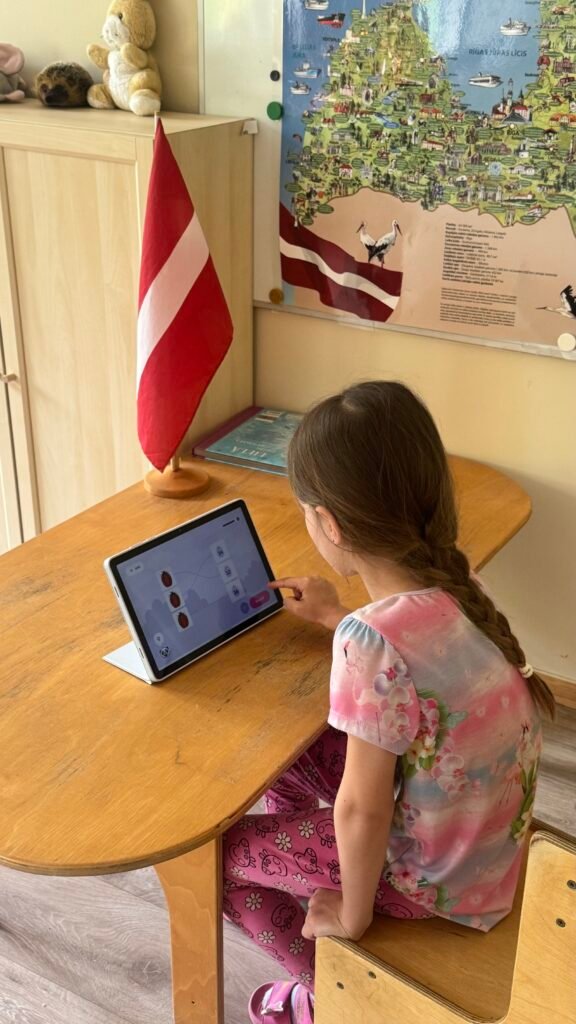
Interactivity is not learning
Digital environments are often praised for being interactive. Yet interactivity alone is not learning. Research on educational apps shows that effective digital experiences must be active, engaged, meaningful and goal-directed (Hirsh-Pasek et al., 2015; Xie et al., 2018) and that what determines learning is not the device, but the quality of content, interaction and support.
For young children this creates a tension every practitioner will recognise: too little support produces confusion and disengagement; too much support removes precisely the choices, mistakes and corrections through which thinking develops.
Before self-direction comes self-regulation
Society, parents, and teachers want children to become “self-directed learners”. Our team’s starting point is a proposition that emerged from our own methodological work and that I believe deserves wider discussion: before a child can direct their own learning, the child must first develop self-regulation and at ages five and six, self-regulation does not appear by itself. It is built, through structure.
We call this working concept structured self-regulation: an environment that preserves meaningful choice and the right to correct one’s own mistakes, while support is calibrated and gradually withdrawn. Agency, in this view, is not the absence of guidance; it is the product of well-designed guidance.
What we did
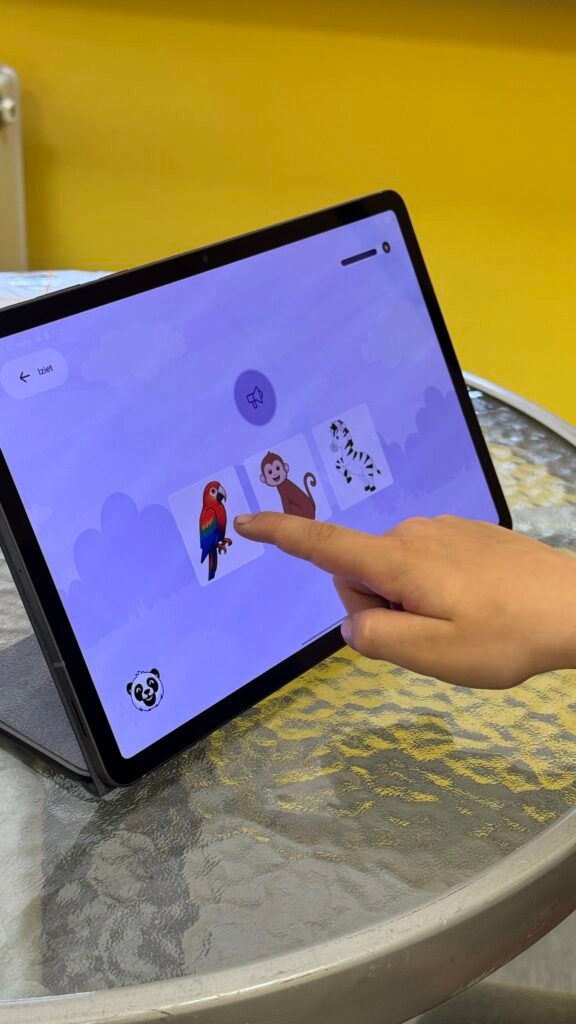
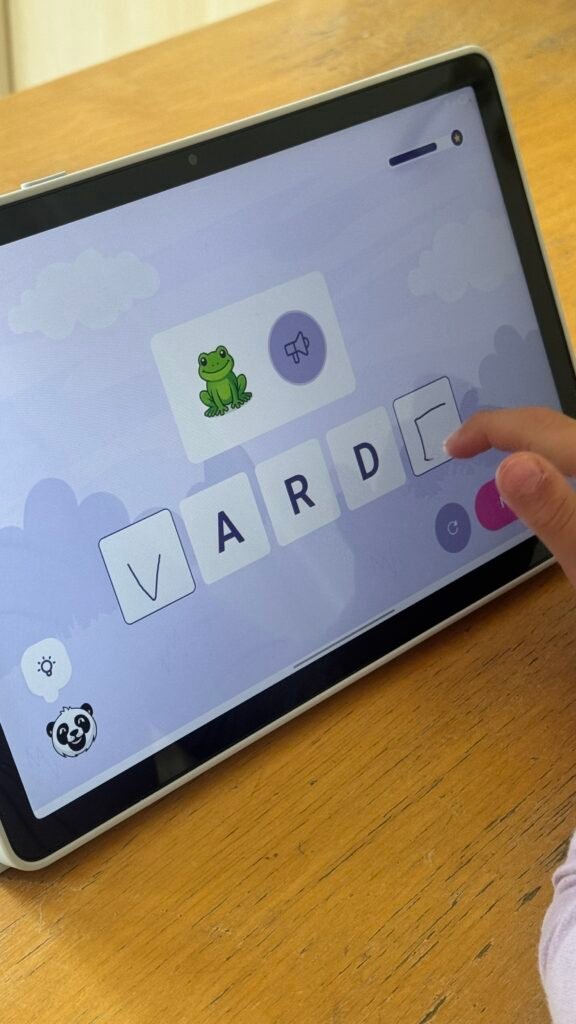
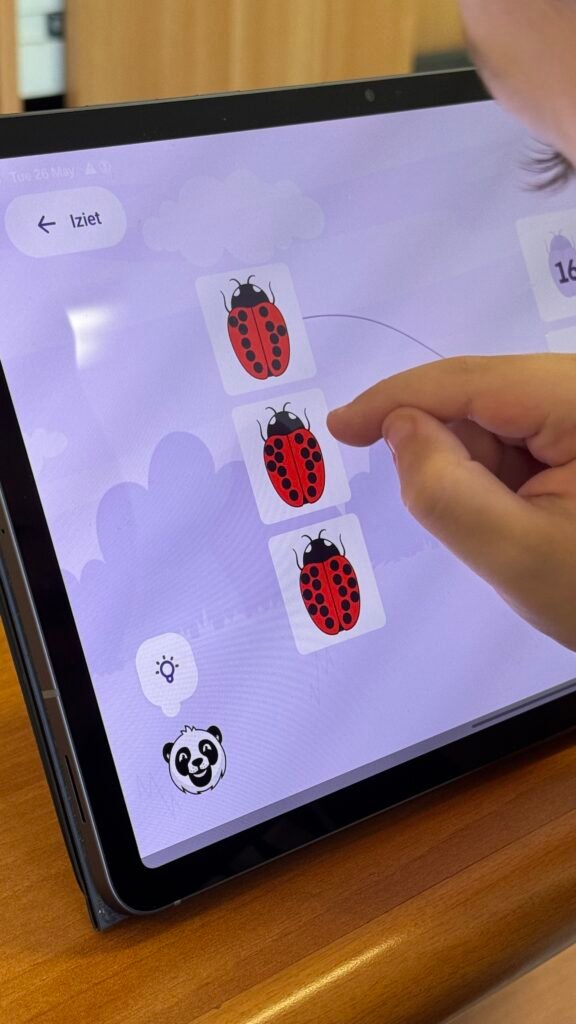
To examine this empirically, we conducted a randomised study with 100 children aged 5–6 in Latvia, comparing two parallel versions of the same digital learning flow in the MyWisy learning environment: a dynamic flow with corrective feedback and repeated attempts, and a static flow in which submitted answers could not be revised. Both groups completed a pre-test, a digital learning session and a post-test. Alongside outcomes, we observed the learning process itself first-attempt accuracy, error correction, completion time, and children’s attentional and cognitive-load signals captured through multimodal observation.
What we found
Some of our results confirm what self-regulated learning theory (Zimmerman, 2002; Efklides, 2011) would predict. Others challenged our own assumptions about what adaptive support actually does for young children including for whom it works differently. I will present the evidence openly, including the parts that made us rethink our own design.
What you can expect in Madeira
In the session you will hear the full results, practical design principles for feedback and error-correction in early childhood digital environments, and an honest discussion of what adaptive technology can and cannot yet do for five-year-olds.
The study was conducted within Latvia’s national research project on artificial intelligence for exploring children’s cognitive development, co-funded by the European Regional Development Fund. Within it, our team develops adaptive learning environments built around individual models of how each young child learns a direction. I am always glad to discuss with colleagues who share this interest.
Those three seconds after a mistake are small. What we choose to build into them may not be. If you think about the design of digital learning for young children as a researcher, a practitioner, or someone shaping policy come and challenge our evidence in Madeira. The most useful conversations tend to start there.
If you’re interested in this, you may also like:
Those three seconds after a mistake are small. What we choose to build into them may not be. If you think about the design of digital learning for young children as a researcher, a practitioner, or someone shaping policy come and challenge our evidence in Madeira. The most useful conversations tend to start there.
If you’re interested in this, you may also like:
Soydan, S., Mutlu, K., & Akış, G. (2025). The impact of children’s attentional behaviour and parent–child interaction on children’s self regulation skills. European Early Childhood Education Research Journal, 33(3), 435–450. https://doi.org/10.1080/1350293X.2024.2393700.
About the Authors
Maija Kulinska is a lecturer at the University of Latvia, She teaches the course “Teaching and Learning” and prepares future teachers. And Maija also is an early childhood educator who works with children every day. She was the pedagogical lead of the study presented here.
Līga Āboltiņa is an Assistant Professor and researcher at the Faculty of Education, Psychology and Art, University of Latvia. Her research focuses on children’s transition to preschool and school, self-regulated learning, and teachers’ professional competence.
References and further reading
Callaghan, M. N., & Reich, S. M. (2021). Mobile app features that scaffold pre-school learning: Verbal feedback and leveling designs. British Journal of Educational Technology, 52(2), 785–806. https://doi.org/10.1111/bjet.13055
Davis, H., Valcan, D. S., & Pino-Pasternak, D. (2021). The relationship between executive functioning and self-regulated learning in Australian children. British Journal of Developmental Psychology, 39(4), 625–652. https://doi.org/10.1111/bjdp.12391
Dörrenbächer-Ulrich, L., & Bregulla, M. (2024). The relationship between self-regulated learning and executive functions—A systematic review. Educational Psychology Review, 36, Article 95. https://doi.org/10.1007/s10648-024-09932-8
Efklides, A. (2011). Interactions of metacognition with motivation and affect in self-regulated learning: The MASRL model. Educational Psychologist, 46(1), 6–25. https://doi.org/10.1080/00461520.2011.538645
Grüneisen, L., Dörrenbächer-Ulrich, L., Kapsali, E., & Perels, F. (2024). Assessing knowledge about self-regulated learning: Validation of a measurement tool for preschoolers. Frontiers in Education, 9, Article 1332170. https://doi.org/10.3389/feduc.2024.1332170
Hirsh-Pasek, K., Zosh, J. M., Golinkoff, R. M., Gray, J. H., Robb, M. B., & Kaufman, J. (2015). Putting education in “educational” apps: Lessons from the science of learning. Psychological Science in the Public Interest, 16(1), 3–34. https://doi.org/10.1177/1529100615569721
Livingstone, S., Lemish, D., Lim, S. S., Bulger, M., Cabello, P., Claro, M., Cabello-Hutt, T., Khalil, J., Kumpulainen, K., Nayar, U. S., Nayar, P., Park, J., Tan, M. M., Prinsloo, J., & Wei, B. (2017). Global perspectives on children’s digital opportunities: An emerging research and policy agenda. Pediatrics, 140(Supplement 2), S137–S141. https://doi.org/10.1542/peds.2016-1758S
McInnes, L., Healy, J., & Melville, J. (2018). UMAP: Uniform Manifold Approximation and Projection. Journal of Open Source Software, 3(29), Article 861. https://doi.org/10.21105/joss.00861
Pintrich, P. R. (2000). The role of goal orientation in self-regulated learning. In M. Boekaerts, P. R. Pintrich, & M. Zeidner (Eds.), Handbook of self-regulation (pp. 451–502). Academic Press.
Takacs, Z. K., Swart, E. K., & Bus, A. G. (2015). Benefits and pitfalls of multimedia and interactive features in technology-enhanced storybooks: A meta-analysis. Review of Educational Research, 85(4), 698–739. https://doi.org/10.3102/0034654314566989
Taylor, G., Sala, G., Kolak, J., Gerhardstein, P., & Lingwood, J. (2024). Does adult–child co-use during digital media use improve children’s learning aged 0–6 years? A systematic review with meta-analysis. Educational Research Review, 44, Article 100614. https://doi.org/10.1016/j.edurev.2024.100614
Wood, D., Bruner, J. S., & Ross, G. (1976). The role of tutoring in problem solving. Journal of Child Psychology and Psychiatry, 17(2), 89–100. https://doi.org/10.1111/j.1469-7610.1976.tb00381.x
Zimmerman, B. J. (2002). Becoming a self-regulated learner: An overview. Theory Into Practice, 41(2), 64–70. https://doi.org/10.1207/S15430421TIP4102_2
This contribution is one of a series of short blog posts by presenters who will be sharing their work at the upcoming annual conference in Funchal, Madeira. Any views expressed in this post are those of the author(s) and do not necessarily reflect the official stance of their affiliated institution or EECERA.