
Facilitating and supporting interagency collaboration in a community-based Area Based Childhood (ABC) programme in Ireland
Posted 24th August 2026
Guest post by Kappa Grealy
Background
Interagency collaboration is a core part of both the methodology, and the success of community and voluntary organisations in reaching and serving their target audience. The Early Learning Initiative (part of the National College of Ireland (NCI)) is a charity that empowers vulnerable/marginalised children and families, through education programmes run at both national and local level (in Dublin’s Inner City). In 2024/25 over 23,000 participants engaged with more than 15,000 home visits and 321 interagency meetings across the organisation (ELI Annual Report 24/25). We could not have the reach and impact we do without the collaboration with other local and national agencies and organisations.
How can the Early Learning Initiative support interagency collaboration in a community-based setting in Dublin?
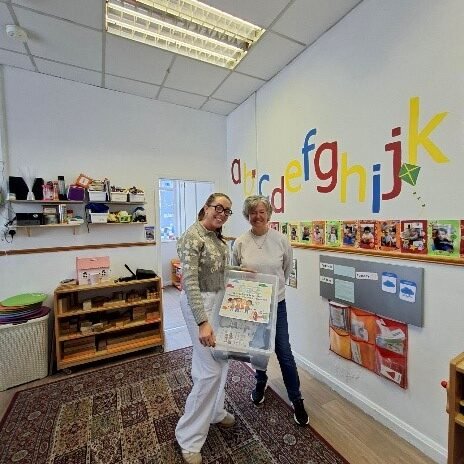
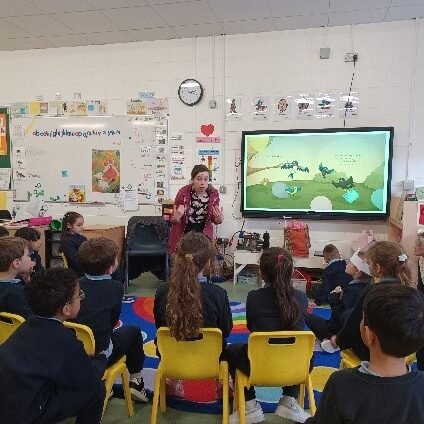
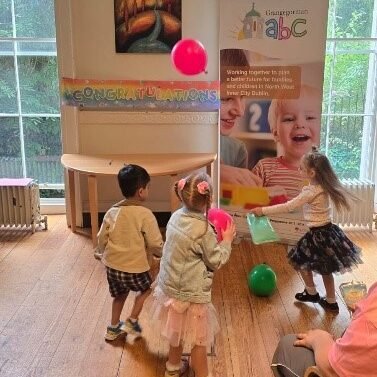
One of the targeted areas we work in is the Area Based Childhood Programme (ABC) in Grangegorman, in the Northwest Inner City of Dublin. It is part of a national prevention and early intervention initiative in Ireland. Designed to tackle child poverty and improve long-term outcomes, it delivers evidence-informed support tailored for children from pre-birth up to six years old. The ABC has a robust multilayered governance structure which is, in itself, a powerful “facilitator” of interagency collaboration. The lead agency is responsible for general oversight and is accountable to both a steering group, which ensures programme delivery is achieved in line with funding agreements and programme policies and guidelines and a consortium made up of local community organisations. We deliver 12/15 programmes a year run by a mixture of local partner organisations and in house ELI coordinators. As such interagency collaboration is part of the framework of everything we do.
Despite the fact that it is an integral part of all our work in the ABC, we are not always able to dedicate time, a scarce resource, especially when working in these setting, to examining the processes behind it. Therefore I was delighted this year, that we were able to dedicate resources to examine how we as lead agency can reflect, reinforce and support existing interagency collaboration as well as build on existing networks and systems. To on the one hand, brainstorm what more we can do, what are the barriers and challenges but on the other hand, reflect back on all that is already being done.
The study takes an interdisciplinary approach, looking at how the different departments and expertise of the core ELI team in Grangegorman and local organisations, can support and facilitate this work. Every aspect is examined, from programme oversight and organisation, to administration and communication support and research and evaluation. We reflect on questions such as: How can we effectively bring more awareness to the interagency work already being done? How do we prove and advocate for the importance of an interdisciplinary interagency approach, the improvement of services, and, ultimately, outcomes for children and families? How do we broach some of the important barriers and tailor the approach to a setting with limited resources and constraints in terms of budget and time?
I looking forward to discussing and reflecting on this with you, as well sharing more details on broader applications across Ireland. I look forward to learning more about community-based approaches to family and children’s wellbeing more generally.
About the author
Kappa Grealy is the Data and Evaluation Coordinator at ELI. She holds a Masters in Psychosocial and Community Intervention from the Autonomous University of Madrid. Between 2022 and 2024 she worked in SURE a research project aimed at improving the well-being and inclusion of adolescents and young people with migrant and refugee backgrounds in educational contexts in Madrid. She completed her Master’s Thesis within this project, on the role of social entities; designing a best practice guide for professionals working with migrant adolescents in that context. Kappa’s research interests include early childhood education, the wellbeing of young migrants and refugees, community-based interventions for marginalised groups, and interagency collaboration. In her role at ELI, Kappa supports the coordination of research and evaluation activities for the Area Based Childhood, Dublin’s Inner City and National Programmes.
Here is a link to her Linkedin: Kappa Grealy – Early Learning Initiative | LinkedIn
If you’re interested in this, you may also like:
Ooms, M., Fukkink, R., Devlieghere, J., Dreier, A., Fischbach, R., Langner, J., … Van Lombergen, L. (2026). Interprofessional collaboration in ECEC: a review of European countries with different levels of system integration. European Early Childhood Education Research Journal, 34(1), 74–89. https://doi.org/10.1080/1350293X.2025.2484266.
Bello, A., Serbati, S., & Milani, P. (2026). Breaking the cycle of disadvantage in early childhood: integrating social work and education through participatory and reflective parenting support. European Early Childhood Education Research Journal, 1–19. https://doi.org/10.1080/1350293X.2026.2614628.
References
- Barnardos (2024) Translating Evidence into Practice: Interagency Collaboration Series 1, Paper 3
- Davidson, G., Bunting, L., & Webb, M. L. (2012). Families experiencing multiple adversities: A review of the international literature. Belfast, UK: Barnardo’s Northern Ireland.
- Devaney, C., Kealy, K., Canavan, J. and McGregor, C. (2021) A review of international experiences in relation to the implementation of a statutory duty for interagency collaboration to ensure the protection and welfare of children. Galway: UNESCO Child and Family Research Centre, National University of Ireland Galway.
- Early Learning Initiative (2025) “ELI Annual Report 2024-2025” Dublin: National College of Ireland.
- Frost N. (2005) Professionalism, partnership and joined up thinking: A research review of front-line working with children and families. Sarlington: Research in Practice
- Haran, H. Butler, P. & Scott. T. (2025) Evaluating the implementation and impact of integrated services in Finglas, North Dublin. Barnardos Ireland.
- Warmington, Paul & Daniels, Harry & Edwards, Anne & Brown, Steven & Leadbetter, Jane & Martin, Deirdre & Middleton, David. (2004). Interagency Collaboration: a review of the literature.
Links and Resources
ABC Grangegorman Website: an Area-Based Childhood Programme based in Dublin 7
The Early Learning Initiative: Early Learning Initiative | National College of Ireland
The Area-Based Childhood Programme: Area Based Childhood Programme (ABC)Tusla – Child and Family Agency
This contribution is one of a series of short blog posts by presenters who will be sharing their work at the upcoming annual conference in Funchal, Madeira. Any views expressed in this post are those of the author(s) and do not necessarily reflect the official stance of their affiliated institution or EECERA.