
The Questions Playground: How Open-Ended Questioning Fosters Playful and Democratic Learning
Posted 22nd August 2026
Guest post by Maria Barbara Donnici
In both formal and informal educational settings, we often grapple with a central challenge: How can we truly cultivate creativity and recognize children’s inherent competences?
This is the exact question that drove our recent pilot action-research project, The Questions Playground. Building on international research around learning through play (LEGO Foundation, 2018; Zosh et al., 2018; Parker & Thomsen, 2019), creative learning (Resnick, 2017) and the Pedagogy of Play (Mardell et al., 2023), our study sought to understand how the simple act of asking a question can transform a classroom.
By putting these contemporary frameworks in dialogue with a Reggio Emilia-inspired playful approach to learning, we explored how questions can become powerful tools for democratic education.
The Power of “Not Knowing” the Answer
Traditionally, questions in a classroom are often used to test knowledge. But what if we flipped the script?
Grounded in the understanding that play and learning are dynamically interconnected, our project framed open-ended questioning as a vital practice to sustain children’s participation. When an educator asks an open-ended question, they are using a dialogic tool that deliberately resists predetermined outcomes.
This shift does two crucial things: it positions children as co-constructors of knowledge, and it actively nurtures their agency. When children know that their unique perspectives are valued over a single “correct” answer, learning becomes a shared, participatory experience.
Educators as Co-Researchers: Inside the “Questions Playground”
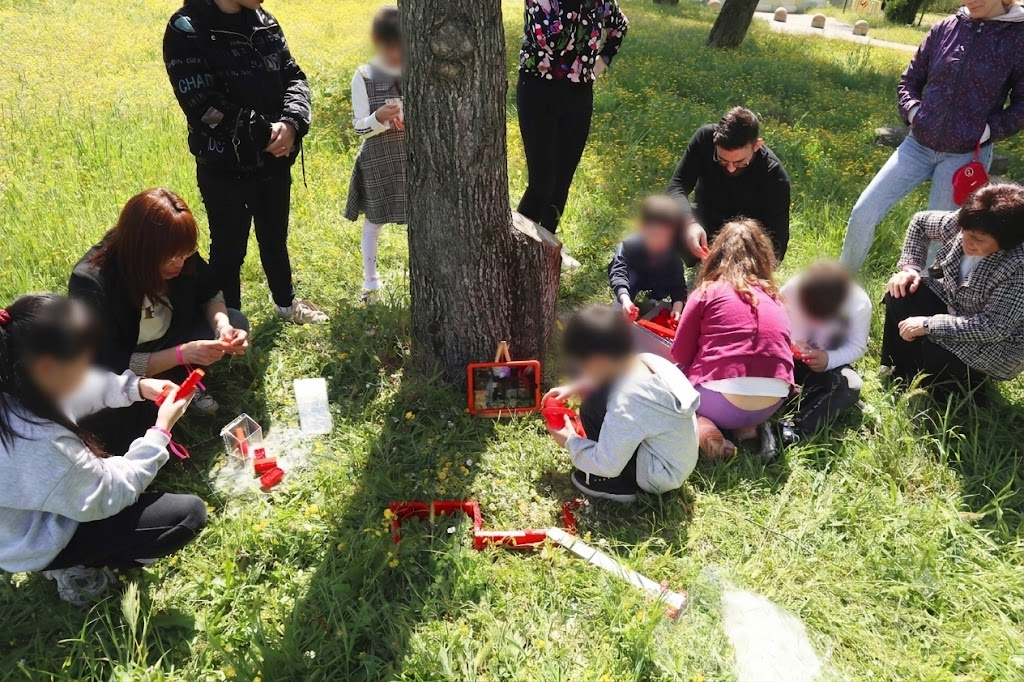
To explore this in practice, we adopted a qualitative, participatory action-research approach. In collaboration with Fondazione Reggio Children and the PhD program in Reggio Childhood Studies, we invited thirty preschool and primary school educators and teachers and doctoral students to step into the “Questions Playground.”
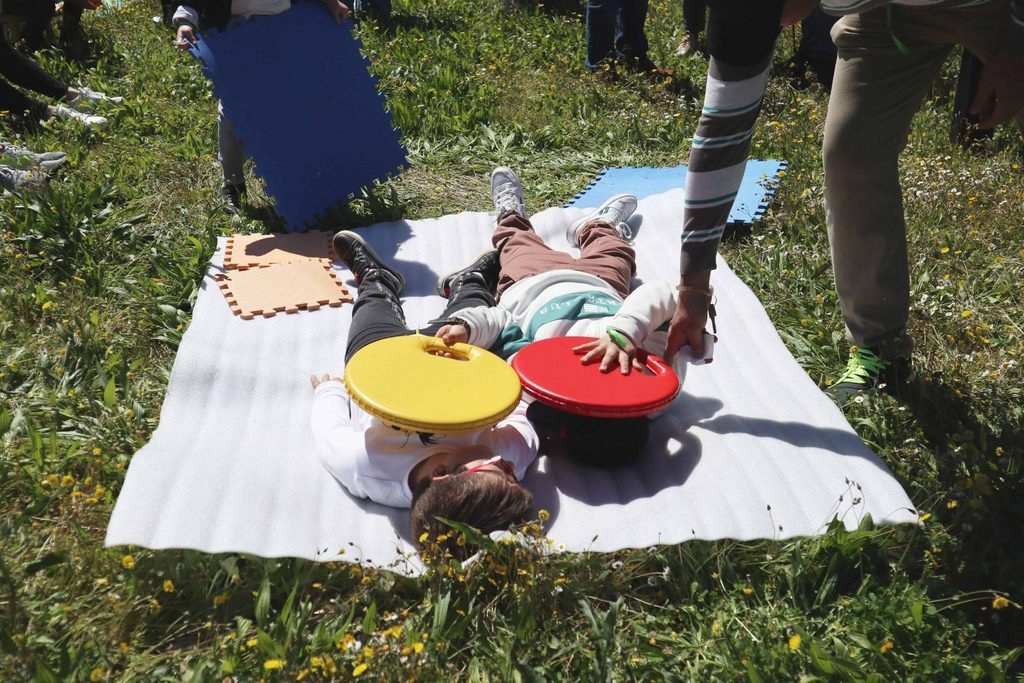
Rather than treating the educators merely as subjects of the study, we recognized them as co-researchers. Together, we built a non-evaluative, dialogic environment. Through workshop-based explorations, participants generated and reflected on open-ended questions inspired by different materials and learning environments. These hands-on sessions were followed by collective dialogue and post-workshop questionnaires to capture their experiences.
Reawakening Curiosity
The preliminary findings from The Questions Playground have been incredibly inspiring.
We discovered that intentionally practicing open-ended questioning does more than just help the students; it profoundly impacts the educators. The process actively reactivated the educators’ own sense of curiosity. Freed from the pressure of guiding children to a specific answer, teachers reported that their classroom interactions became more inclusive and deeply rooted in playful learning.
Why This Matters
The implications of this pilot study extend far beyond a single workshop. It suggests that if we want to foster truly participatory environments, we need to rethink how we train and support our teachers.
Embedding the practice of open-ended questioning directly into teachers’ professional development can fundamentally strengthen democratic learning. It moves playfulness away from being an option and positions it as a foundational dimension of quality education.
When educators learn to play with questions, they open the door for children to play with ideas.
How might you change the way you ask questions in your learning environment tomorrow?
If you’re interested in this, you may also like:
Liu, K., Ye, P., Gan, L., & Wang, X. (2025). ‘How are rainbows made?’: profiles of early childhood teachers’ beliefs and their associations with responses to young children’s causal questions. European Early Childhood Education Research Journal, 33(2), 223–242. https://doi.org/10.1080/1350293X.2024.2427248.
Murray, J. (2022). Any questions? Young children questioning in their early childhood education settings. European Early Childhood Education Research Journal, 30(1), 108–130. https://doi.org/10.1080/1350293X.2022.2026436.
About the Author
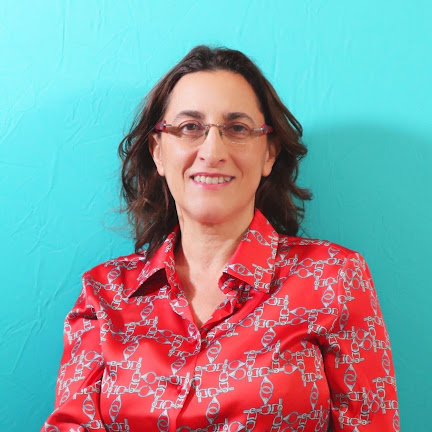
Maria Barbara Donnici is the Coordinator of the Research Area at Fondazione Reggio Children-Centro Loris Malaguzzi, where she has worked since 2012. Specifically, she is the project manager and principal investigator of the Inclusive Sustainable and Playful Innovations Research in Education (INSPIRE) project. She holds a PhD in Reggio Childhood Studies, and her research investigates the transition from traditional, transmissive educational models toward more inclusive, playful approaches to teaching and learning. Through her work and global advocacy, she champions the right to play and the right to quality education for all.
References
Biesta, G. J. (2011). Learning democracy in school and society: Education, lifelong learning, and the politics of citizenship. Springer Science & Business Media.
Bruner, J. (1996). The culture of education. Harvard University Press.
Dewey, J. (1910). How we think. D.C. Heath & Co.
Edwards, C., Gandini, L., & Forman, G. (Eds.). (2012). The hundred languages of children: The Reggio Emilia experience in transformation (3rd ed.). Praeger.
Goddard, L., Donnici, M. B., & Ferrari, E. (2026). Two wings of a butterfly: Promoting the right to play through a playful approach to learning in global contexts. In Macy, M., Ring, E., & Landini, A.(Eds.), Realizing children’s rights in a global context: Glocalization of the Reggio Emilia experience. IGI Global.
Malaguzzi, L. (1990). Speech at the international conference on the rights and potentials of children and adults. In P. Cagliari, M. Castagnetti, C. Giudici, C. Rinaldi, V. Vecchi, & P. Moss (Eds.), Loris Malaguzzi and the schools of Reggio Emilia (pp. 396–397). Routledge.
Mardell, B., Ryan, J., Krechevsky, M., Baker, M., Schulz, T. S., & Liu-Constant, Y. (2023). A pedagogy of play: Supporting playful learning in classrooms and schools. Project Zero.
Moss, P. (2015). Transformative change and real utopias in early childhood education: A story of democracy, experimentation and potential. Routledge.
Resnick, M. (2017). Lifelong kindergarten: Cultivating creativity through projects, passion, peers, and play. MIT Press.
Rinaldi, C. (2021). In dialogue with Reggio Emilia: Listening, researching and learning. Routledge.
Rinaldi, C. (2025, April 10). Open Questions on Education [Conference Keynote]. Retrieved from https://www.frchildren.org/en/news-and-events/news/post/carla-rinaldis-open-questions-education
The LEGO Foundation. (2017a). What we mean by: Learning through play (Version 1.2). Billund: The LEGO Foundation. https://cms.learningthroughplay.com/media/vd5fiurk/what-we-mean-by-learning-through-play.pdf
United Nations General Assembly. (1989). Convention on the Rights of the Child. United Nations.
United Nations Committee on the Rights of the Child. (2013). General comment No. 17 on the right of the child to rest, leisure, play, recreational activities, cultural life and the arts (Article 31) (CRC/C/GC/17). United Nations. https://digitallibrary.un.org/record/778539?ln=en
Vecchi, V. (2010). Art and creativity in Reggio Emilia: Exploring the role and potential of ateliers in early childhood education. Routledge.
Zosh, J. M., Hopkins, E. J., Jensen, H., Liu, C., Neale, D., Hirsh-Pasek, K., Solis, S. L., & Whitebread, D. (2017). Learning through play: a review of the evidence (white paper). The LEGO Foundation.
This contribution is one of a series of short blog posts by presenters who will be sharing their work at the upcoming annual conference in Funchal, Madeira. Any views expressed in this post are those of the author(s) and do not necessarily reflect the official stance of their affiliated institution or EECERA.