
The Role of Playfulness in Professional Development
Posted 22nd July 2026
Guest post by Alessandra Pimentel and Mônica Appezzato Pinazza
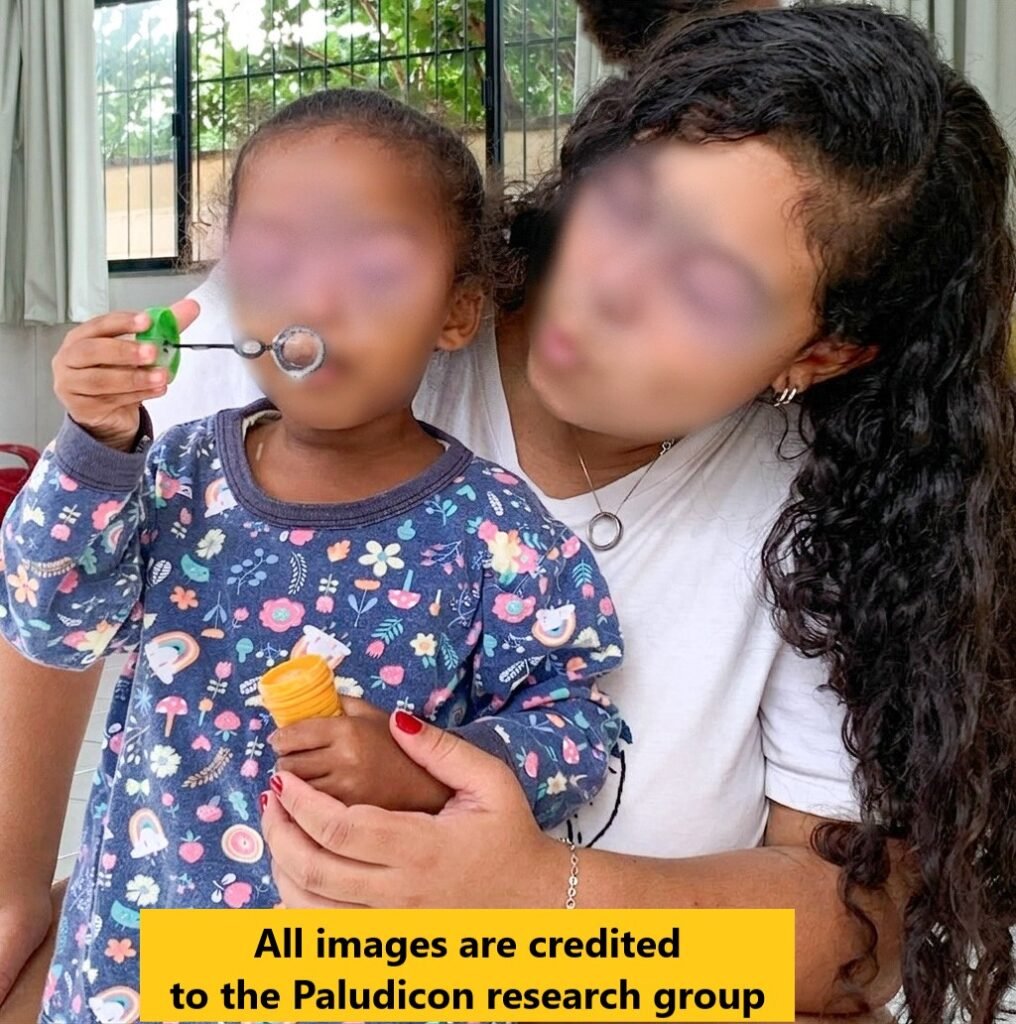
The PALUDICON Research Group (Program of Playful Activities in Different Contexts), originally created as a university extension program, aims to promote professional development through playfulness, grounded in Historical-Cultural Theory (HCT) and the Reggio Emilia Approach.
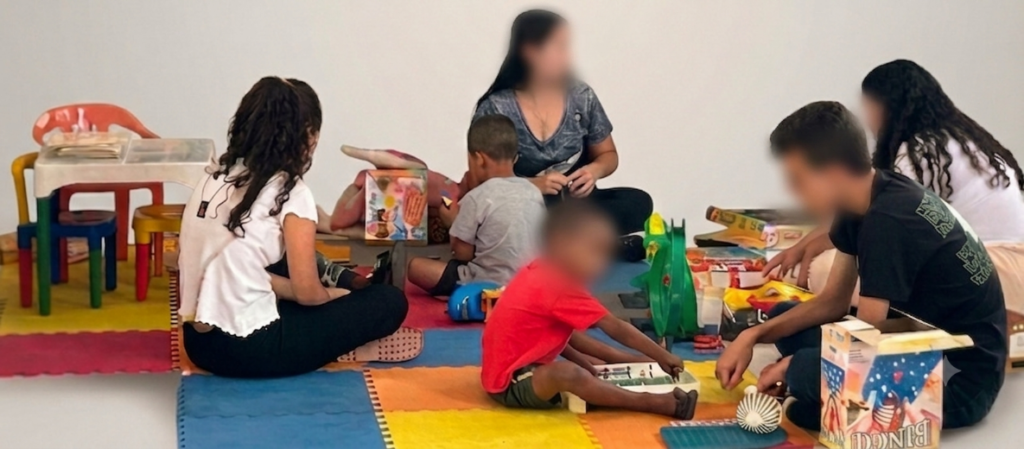
Between 2022 and 2025, the program was carried out by a total of 108 undergraduate students from Psychology, Theater, Music, Applied Arts, and Pedagogy courses. Now, their field diaries constitute the central object of study, which intends to answer the following question:
- To what extent did the playful interaction with children, carried out by the extension students, contribute to their professional development, especially regarding their creativity, problem-solving capacity, and autonomy?
Definitions & Premises
Processual Homology: A methodological framework establishing that adult training must structurally mirror the playful, experiential environments vital for children. Far from infantilizing adults, it recognizes that to truly foster and understand children’s play, professionals must actively participate in it – a process that directly drives creativity, problem-solving, and professional autonomy.
Playworker (or Toy Librarian, the “Brinquedista”): Operating as a more experienced peer, the playworker facilitates free play and creates stimulating playful scenarios, demonstrating the ability both to offer support and to propose challenges. Aligned with the figure of the atelierista in the Reggio Emilia Approach, the playworker recognizes the value of an aesthetically rich and challenging environment for children’s play; within this framework, the playworker’s active, shared play alongside children serves as a catalyst for their own professional development.
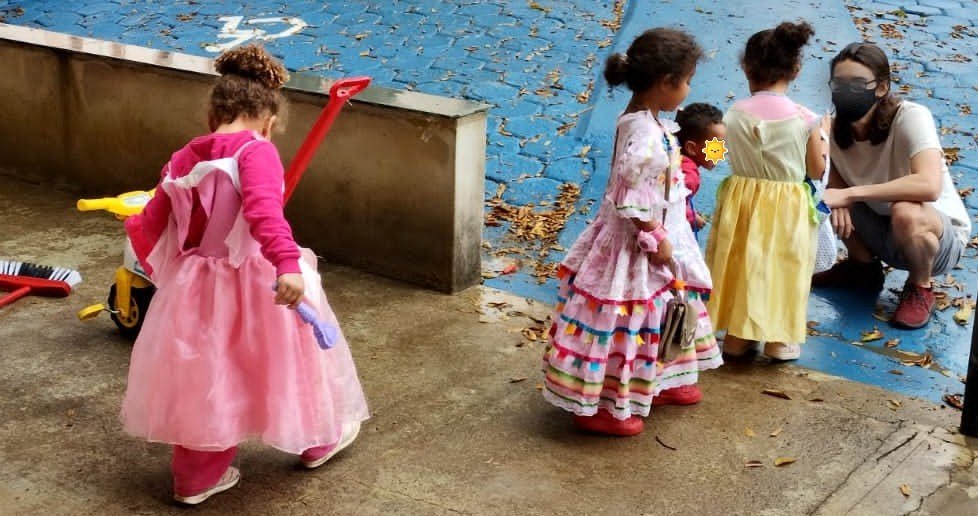
Outdoor Play Learning: Built on the imperative to “un-wall” childhood, natural outdoor environments function as holistic laboratories. Here, playful experiences naturally integrate sensory exploration, physical movement, scientific curiosity, and ecological awareness.
Data analysis method (study of field diaries): records should go beyond the description of events, containing reflections, expressions of feelings, questioning, and ideas to project future actions.
Field diaries as metacognitive work – categories of analysis
CREATIVITY: in the records, the presence of proposals (re)created by the participating undergraduate student, with imagination in action. Inversely, the identification of cases in which this opportunity did not become consolidated.
PROBLEM-SOLVING: solutions for unpredictable situations, ranging from dilemmas related to play to conflicts and emotional discharges. Inversely, the identification of a lack of solutions or lacunary responses to what was demanded.
AUTONOMY: development of voluntary conduct and conscious mediation, observing an increase in the frequency of self-regulation consolidating metacognitive processes that return to one’s own practice. Inversely, the identification of low-autonomy processes.
Preliminary Results
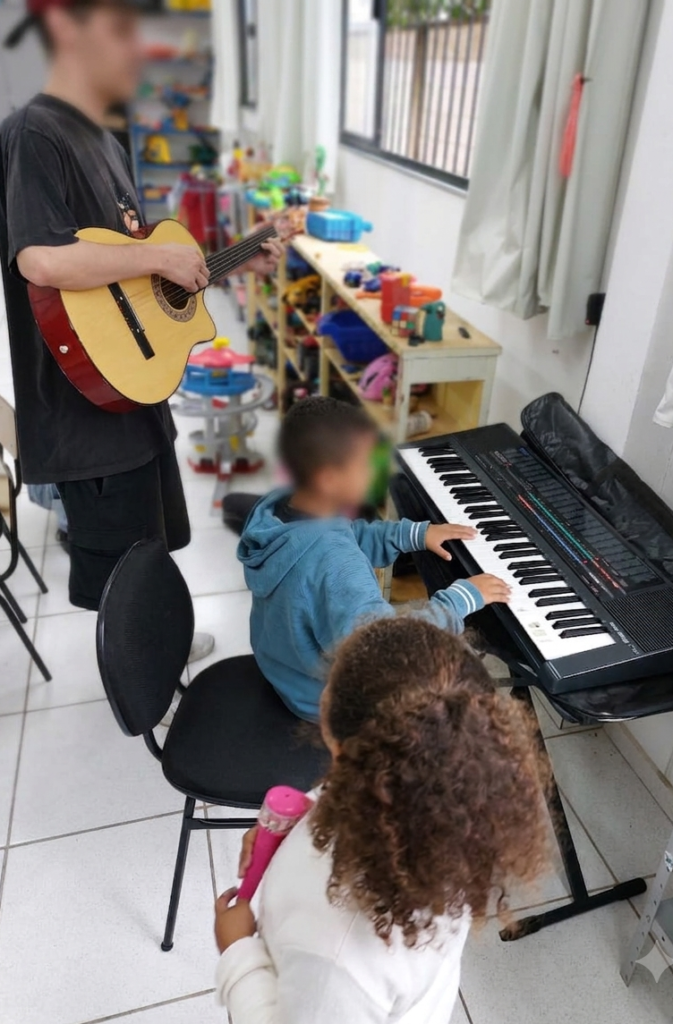
There is a trend toward the existence of a strong relationship between creativity and problem-solving. As participants expand their creative imagination through play, they become increasingly capable of generating flexible and effective responses to unexpected situations, interpersonal conflicts, and emotional demands.
The development of professional autonomy, however, follows a different trajectory. Unlike creativity and problem-solving, which emerge relatively early, autonomy requires more time to consolidate. Students who have participated in the program for at least one year demonstrate greater self-regulation, confidence, and independence in decision-making than those with less participation time.
What is expected to be brought to the public?
Debate on the formative role of the field diary as a powerful instrument to develop professionalism, especially regarding creativity, problem-solving, and autonomy;
Reflect on enhancing university curricula by incorporating programs that utilize playfulness as a sophisticated and rigorous methodology for professional development.
Why does this research matter NOW? The Challenge of Artificial Intelligence
In a context increasingly shaped by Artificial Intelligence and automation, the capacity to cultivate the most complex human skills becomes a priority. Creativity, complex problem-solving, reflective judgment, and autonomous action are competencies that are not easily replicable by AI. By placing play at the center of professional training, this research argues that playful environments offer a unique contribution to preparing professionals capable of responding, in a creative and ethical manner, to the complex realities of contemporary education.
Further Reading
Articles related to the research:
Field diary for analysis of an extension proposal in the area of playful psychology
The experiential learning theory and the research about professional development
References:
Bodrova, E., & Leong, D. J. (2019). Making play smarter, stronger, and kinder: Lessons from Tools of the Mind. American Journal of Play, 12(1), 37–52.
Brougère, G. (2021). Playing, learning, and the everyday life of the young child. Early Years: An International Journal of Research and Development, 41(2), 154–168.
Elkonin, D. B. (2005). Toward the problem of stages in the mental development of the child & The Psychology of Play. Journal of Russian & East European Psychology, 43(1–2).
Masseretti, M., & Schenetti, M. (2024). The freedom to experiment: The skills of the child and the guiding role of the adult in active outdoor play. Q-TIMES Webmagazine, 16(3), 105–118.
Pimentel, A. (2007). Vygotsky: Uma abordagem histórico-cultural da educação infantil [Vygotsky: A cultural-historical approach to early childhood education]. In J. Oliveira-Formosinho, T. M. Kishimoto, & M. A. Pinazza (Eds.), Pedagogia(s) da Infância (1st ed., pp. 219–248). ArtMed.
Schön, D. A. (2023). Educando o profissional reflexivo: Um novo design para o ensino e a aprendizagem no profissional [Educating the reflective practitioner: A new design for teaching and learning in the profession]. Penso.
About the authors
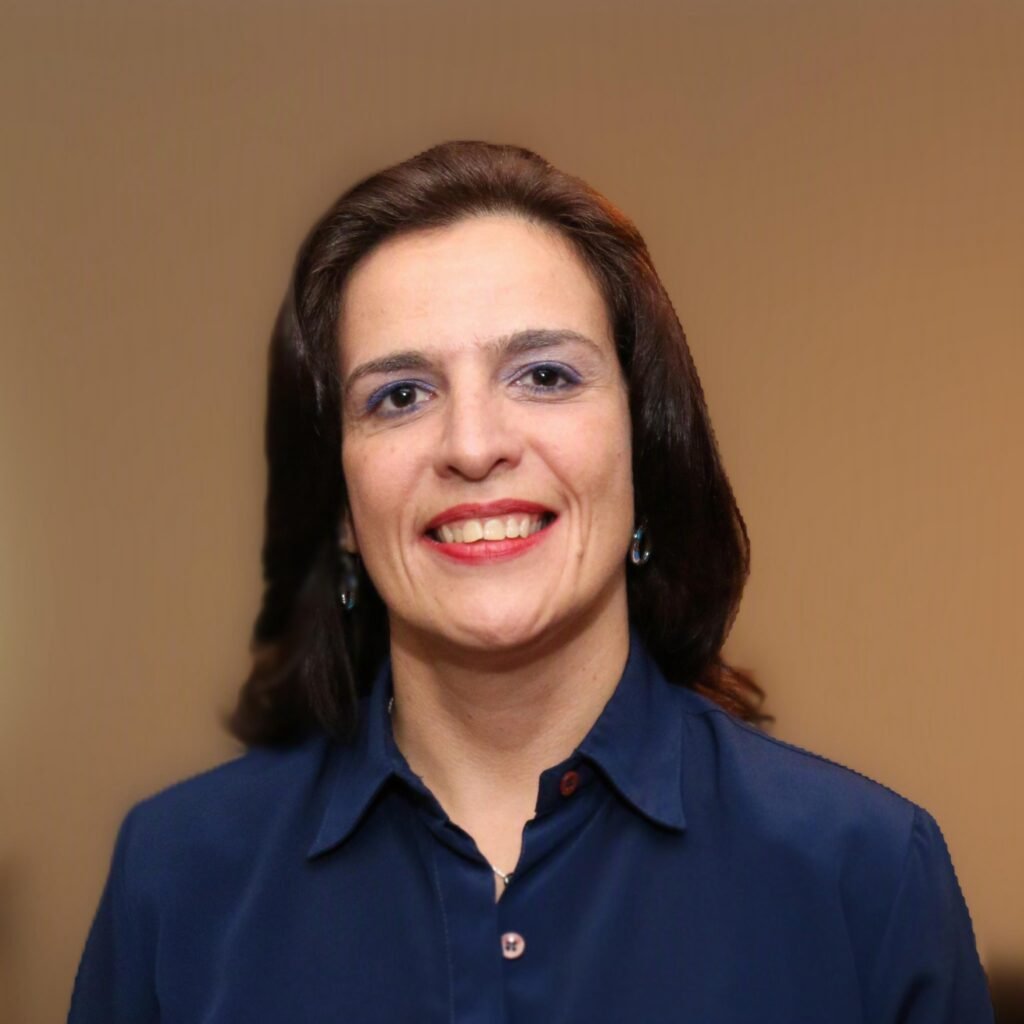
Alessandra Pimentel is Professor at University of São João Del Rei’s Psychology Department and Leader of the Paludicon Research Group (Federal University of São João del-Rei – UFSJ). Drawing on her experience coordinating the UFSJ toy library, she is currently conducting a post-doctoral fellowship at the School of Education of the University of São Paulo (FEUSP). Her partnerships include researchers from CIEI (Integrated Contexts of Early Childhood Education research group), CRIA (Center for Respect for Childhoods and their Learning), and GEPEDEI (Specificities of Teaching in Early Childhood Education research group).

Mônica Appezzato Pinazza is Full Professor at the Faculty of Education, University of São Paulo (FEUSP), São Paulo, Brazil. Coordinator of the “Integrated Early Childhood Education Contexts” Research Group and head of the “Professional Training and Supervision Practices in Educational Contexts” Study Group at FEUSP. Researcher, trainer, and author of publications in the fields of childhood pedagogies, early childhood education, and the training of teachers and management teams.
Contacts and Useful Links
If you are interested in research regarding the role of playfulness in professional development, it will be a pleasure to exchange ideas with you!
Instagram: @brinquedotecaufsj and @g contextosintegrados
Email: alessandrapimentel@ufsj.edu.br and mapin@usp.br
YouTube channel: Brinquedoteca UFSJ – YouTube
Explore our work: ORCID, Research Gate
This contribution is one of a series of short blog posts by presenters who will be sharing their work at the upcoming annual conference in Funchal, Madeira. Any views expressed in this post are those of the author(s) and do not necessarily reflect the official stance of their affiliated institution or EECERA.