
Voices at Play: When Ethics and Methodology Go Hand in Hand in Research with Young Children
Posted 1st July 2026
By Anne Marie Villumsen and Katrine Nøhr
Young children are increasingly recognised as important contributors to research about their own lives. Yet this recognition raises a fundamental question: how can researchers create opportunities for children to share their perspectives in ways that are meaningful for them?
Within the Danish research project TRoLD (Flourishing Through Play), our work focuses on children’s wellbeing and participation in early childhood education and care (ECEC). More specifically, we conceptualise wellbeing as children’s opportunities for participation in everyday communities and relationships with peers. Understanding these relationships from children’s own perspectives is important, but it also presents methodological and ethical challenges.
Traditional interviews often rely heavily on language and abstract reflection. For many young children, however, experiences are communicated through action, play, and engagement with familiar materials and visualizations. This requires methods that are sensitive to how children express themselves and make sense of their social worlds.
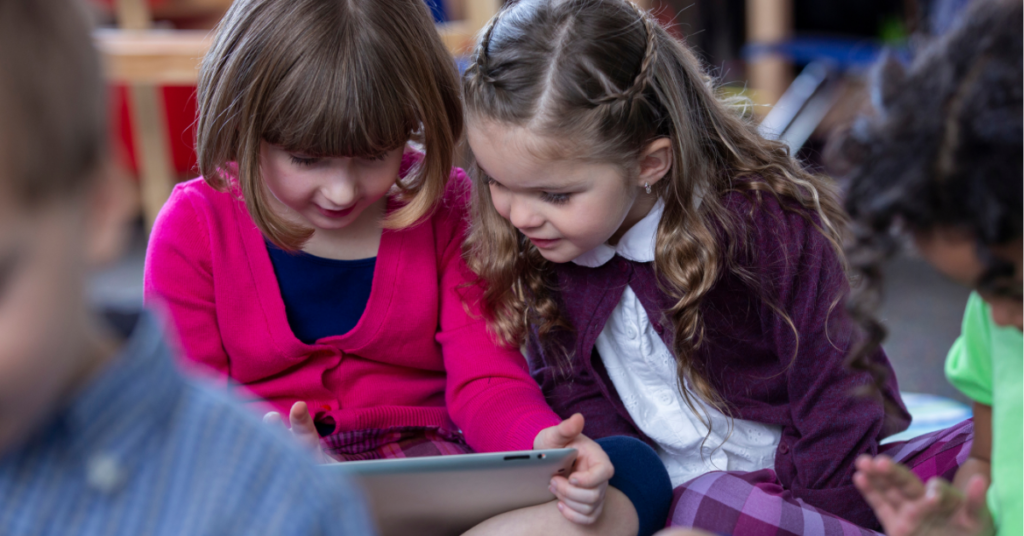
One method developed within the project uses photographs of children in their everyday ECEC setting. During the research encounter, children are first invited to identify themselves among the photographs and then to select the children they play with. The photographs provide a concrete and familiar point of reference, enabling children to communicate experiences and relationships that might otherwise be difficult to express verbally. Rather than relying solely on abstract questions about friendships or social participation, the method builds on children’s experiences with and perspectives on their peer community and supports their active engagement in the research process.
The use of photographs does more than support data collection. It creates a research situation in which children can draw on familiar experiences and demonstrate competence. By reducing the linguistic demands of the interview and providing concrete visual cues, the method enables children to participate on their own terms and strengthens their opportunities to influence the knowledge being produced.
Importantly, this example illustrates how ethics and methodology are closely intertwined. Ethical considerations in research with young children are often discussed in terms of consent, confidentiality, and protection. While these remain crucial, our experiences suggest that ethics also resides within methodological choices. The methods researchers choose shape not only the knowledge that is generated but also children’s experiences of participation.
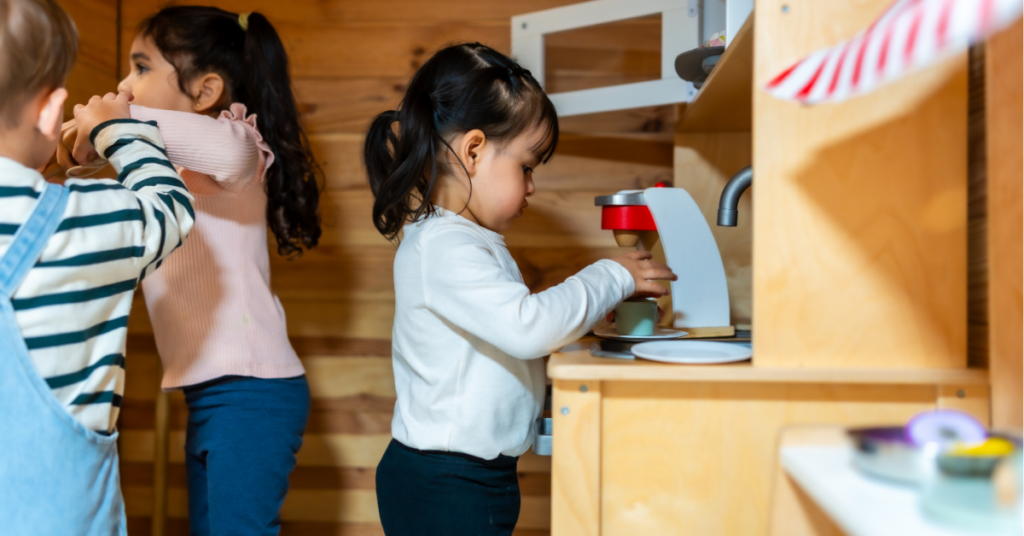
When children are able to recognise themselves in the research task, understand what is being asked of them, and experience success in contributing, participation becomes more than a procedural requirement. It becomes an opportunity for agency and mastery. In this sense, methodology is never neutral. The design of research encounters can either enable or constrain children’s participation and influence whose voices are ultimately heard.
As researchers, this invites us to think beyond the question child participation in research. We need to ask how research itself can become a space where children experience being listened to, taken seriously, and recognised as knowledgeable contributors to understanding their own lives.
The ongoing challenge for early childhood researchers is therefore not simply to include children in research, but to develop methods that support both robust knowledge production and meaningful participation. Our experiences from TRoLD suggest that when ethics and methodology are considered together, research can become a more democratic practice for everyone involved.
In our conference presentation, we will examine these ethical considerations in more detail, drawing on concrete examples of unforeseen situations encountered during fieldwork to illustrate how participatory research with young children requires researchers to navigate ethical dilemmas that cannot always be anticipated in advance.
Further reading
Ben-Arieh, A., Casas, F., Frønes, I. & Korbin, J.E. (2014). “Multifaceted concept of child well-being”. I A. Ben-Arieh m.fl. (red.), Handbook of Child Well-Being. Theories, Methods and Policies in Global Perspective. Dordrecht: Springer: 1-27.
Bessell, S. (2024). Research with children: Balancing protection and participation. In The Routledge Handbook of Human Research Ethics and Integrity in Australia (pp. 314-325). Routledge.
Christensen, P., & Prout, A. (2002). Working with ethical symmetry in social research with children. Childhood, 9(4), 477-497.
Koch, A. B. (2021). Children as participants in research. Playful interactions and negotiation of researcher–child relationships. Early Years, 41(4), 381-395.
Koch, A. B., & Jørgensen, H. H. (2025). Trivsel i dagtilbud: legeeksperimenter som metode til samskabelse af ny viden [Well-Being in Early Childhood Education and Care: Play Experiments as a Method for the Co-Creation of New Knowledge]. Nordisk barnehageforskning, 22(4), 30-50. https://doi.org/10.23865/nbf.v22.703
Prout, A., & James, A. (2015). A new paradigm for the sociology of childhood?: Provenance, promise and problems. In Constructing and reconstructing childhood (pp. 6-28). Routledge.
Punch, S. (2002). Research with children: The same or different from research with adults? Childhood, 9(3), 321-341.
Villumsen, A.M. & Boye Koch, A. (2023): At komme i trivsel. Pædagogers arbejde med mistanke om diagnoser i dagtilbud [The journey towards well-being. Early Childhood Educators’ Work with Suspected Diagnoses in Daycare Settings]. In: Kjær, B., Morin, A. & Petersen, K.E. (ed.): Diagnoser i professionelt arbejde – Pædagogers arbejde med børn og unge med diagnoser [Diagnosis in professional practice – Diagnosis in children and youth and pedagogical work]. 153-166. First Edition. Copenhagen. Samfundslitteratur.
Villumsen, A.M.; Nicolajsen, J.S. & Kitchen, K.H.F. (2024): Børns perspektiver – fagprofessionelles arbejde med at tilvejebringe børns perspektiver. Vidensindsamling under Videnscenter om børneinddragelse og udsatte børns liv. [Child perspectives – professional work with child participation]. Copenhagen: VIVE – The Danish Center for Social Science Research.
Vänskä, N., Sipari, N. & Haataja, L. (2020) What Makes Participation Meaningful? Using Photo-Elicitation to Interview Children with Disabilities, Physical & Occupational Therapy In Pediatrics, 40:6, 595-609, DOI: 10.1080/01942638.2020.1736234
Willis, C., Girdler, S., Thompson, M., Rosenberg, M., Reid, S., & Elliott, C. (2017). Elements contributing to meaningful participation for children and youth with disabilities: a scoping review. Disability and rehabilitation, 39(17), 1771-1784.
About the authors
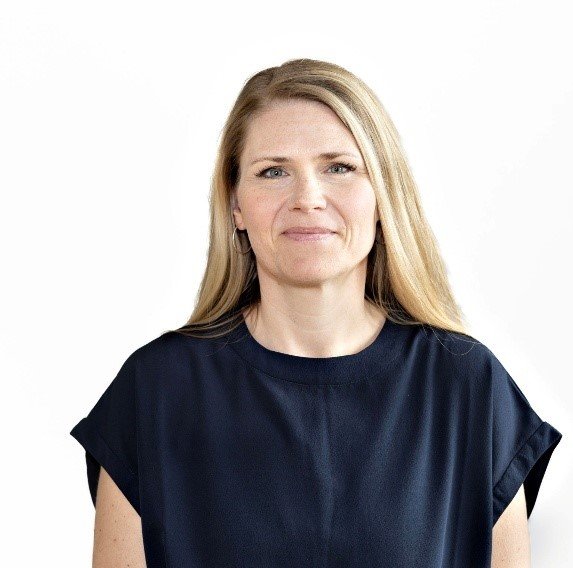
Anne Marie Villumsen is a Senior Researcher in childhood studies and family social work.
Her research focuses on the elicitation of children’s perspectives, children’s wellbeing, child and parent participation in statutory social work, and qualitative research methodologies. She is part of the Danish research project TRoLD (Flourishing Through Play).
Connect with Anne Marie on LinkedIn.

Katrine Nøhr is a Senior Analyst in early childhood education and care and part of the Danish research project TRoLD (Flourishing Through Play).
Her research focuses on children’s wellbeing, play and participation, professionals’ work to support children’s wellbeing in inclusive educational settings, and methodological approaches to eliciting children’s voices.
Connect with Katrine on LinkedIn.
This contribution is one of a series of short blog posts by presenters who will be sharing their work at the upcoming annual conference in Funchal, Madeira. Any views expressed in this post are those of the author(s) and do not necessarily reflect the official stance of their affiliated institution or EECERA.