
Between Digital Tools and Play: Understanding Early Childhood Teachers’ Decision-Making in the UK and China
Posted 22nd July 2026
Guest post by Shuolin He
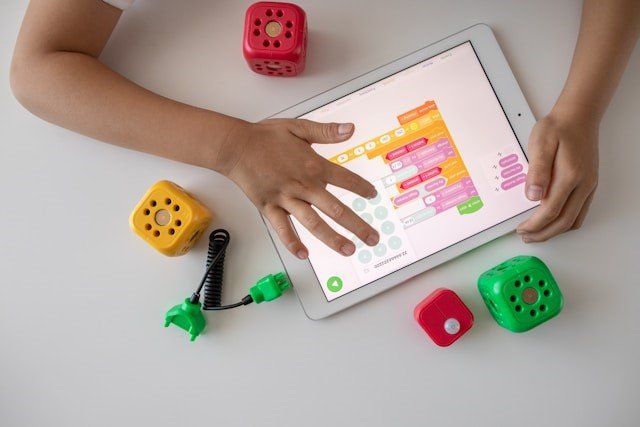
Photo by Robo Wunderkind on Unsplash
Digital technology is now part of many young children’s everyday lives, both at home and in educational settings. In early childhood education, however, its use remains a complex and sometimes contested issue. While digital tools may support communication, documentation, literacy, creativity and home-school links, there are also understandable concerns about screen time, children’s health, distraction, commercial platforms and whether digital activities may displace hands-on, social and play-based experiences.
This research explores how early childhood educators in the UK and China perceive and make decisions about digital practices in early years classrooms. Rather than asking simply whether digital technology is “good” or “bad” for young children, my research focuses on a more practice-based question: how do teachers decide when, why and how digital tools should be used?
This question is important because teachers are not passive implementers of policy or technology. They make everyday pedagogical decisions within particular cultural, institutional and material conditions. These decisions are shaped by many factors, including curriculum expectations, inspection pressures, school or kindergarten policies, available resources, parental expectations, professional confidence, children’s needs and teachers’ own beliefs about early learning.
One key theme emerging from the research is that teachers often see digital tools as useful when they serve a clear pedagogical purpose. For example, teachers may use digital resources to support phonics, communication with families, assessment documentation or children’s access to visual and multimodal materials. However, teachers are also cautious. They frequently emphasise the need to balance digital and non-digital experiences, particularly in early childhood, where physical activity, social interaction, sensory exploration and imaginative play remain central.
Another important issue is professional agency. Teachers’ decisions are not made in isolation. They are shaped by past experiences, future aims and present practical conditions. For example, a teacher may value digital tools in principle but avoid using them because of unreliable Wi-Fi, limited devices, lack of training or concerns about children’s attention. Another teacher may use technology confidently but still restrict screen-based activities because of health concerns or parental expectations. These examples show that digital practice is not only a matter of individual attitude; it is also shaped by the wider ecology of early years provision.
The cross-national aspect of the research also raises interesting questions. In England, early years policy gives relatively limited direct pedagogical guidance on digital technology, while placing strong emphasis on safeguarding, developmentally appropriate practice and professional judgement. In China, digital practice is shaped within a different policy environment, including stronger national attention to children’s health, screen time and myopia prevention, alongside wider educational digitalisation. These differences help illuminate how teachers’ choices are shaped by policy cultures as well as classroom realities.
In my EECERA presentation, I will share findings from this research and discuss what they suggest for early childhood pedagogy, teacher professionalism and digital education policy. It will explore why teachers’ professional judgement matters when digital tools are increasingly present in young children’s learning environments.
Ultimately, this research argues that discussions about digital technology in early childhood should move beyond simple oppositions between “digital” and “non-digital” learning. The more important question is how digital practices can be critically, carefully and contextually integrated into early years environments in ways that respect children’s development, teachers’ professional judgement and the value of play.
References and further reading
Arnott, L. (2016). An ecological exploration of young children’s digital play: Framing children’s social experiences with technologies in early childhood. Early Years, 36(3), 271–288.
Davis, F. D. (1989). Perceived usefulness, perceived ease of use, and user acceptance of information technology. MIS Quarterly, 13(3), 319–340.
Marsh, J., Arnseth, H. C., & Kumpulainen, K. (2018). Maker literacies and maker citizenship in the MakEY project. Multimodal Technologies and Interaction, 2(3), 50.
Marsh, J., Plowman, L., Yamada-Rice, D., Bishop, J., & Scott, F. (2016). Digital play: A new classification. Early Years, 36(3), 242–253.
Priestley, M., Biesta, G., & Robinson, S. (2015). Teacher agency: An ecological approach. Bloomsbury Academic.
Venkatesh, V., & Davis, F. D. (2000). A theoretical extension of the Technology Acceptance Model: Four longitudinal field studies. Management Science, 46(2), 186–204.
About the author

Shuolin He is a PhD researcher in the School of Education at the University of Sheffield. Her research focuses on early childhood educators’ perceptions of digital practices and pedagogical decision-making in the UK and China. Her broader research interests include early childhood education, digital childhoods, teacher agency, play provision, cross-national research and mixed-methods inquiry.
This contribution is one of a series of short blog posts by presenters who will be sharing their work at the upcoming annual conference in Funchal, Madeira. Any views expressed in this post are those of the author(s) and do not necessarily reflect the official stance of their affiliated institution or EECERA.