
Unlocking Hidden Resources: Rethinking Early Childhood Education in Resource-Scarce Contexts
Posted 23rd June 2026
Guest post by Lesley Wood and Mariëtte Koen
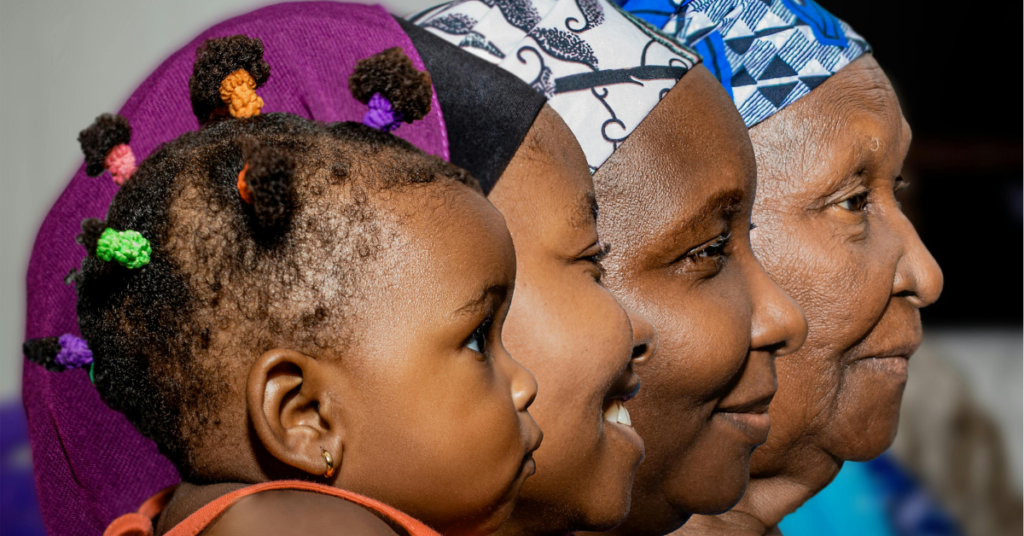
Across the globe, early childhood education (ECE) is widely recognised as the foundation for lifelong learning, well-being, and sustainable development. Yet in many resource-scarce contexts, achieving high-quality and sustainable provision remains a pressing challenge. Our upcoming EECERA presentation offers a different perspective that moves beyond deficit views of scarcity and instead asks: What if the resources we need are already there, but not yet recognised?
Drawing on a synthesis of eight participatory action research projects, our study explores how “hidden resources” within communities can be mobilised to transform ECE systems. These resources extend beyond material assets to include the rich human, social, cultural, and pedagogical strengths embedded in practitioners, families, and communities.
Moving beyond deficit thinking
Much of the discourse on ECE in low-resource settings focuses on what is missing: limited funding, inadequate infrastructure, and insufficient training. While these challenges are real, this lens can obscure the strengths already present. Our work contributes to a growing shift away from deficit-based narratives, highlighting instead the capacity of practitioners and communities as agents of meaningful change. Central to this approach is a participatory paradigm, where practitioners are not passive recipients of professional development but active co-researchers. Through collaborative inquiry, reflective dialogue, and co-design, they generate contextually relevant solutions to local challenges while strengthening their own professional agency.
A participatory framework for change
In our presentation, we introduce a participatory framework designed to unlock hidden resources and support sustainable improvements in ECE. Emerging from cross-case analysis, the framework highlights several key mechanisms:
- Collaboration as a resource: Partnerships among practitioners, parents, and communities enable shared learning, collective problem-solving, and mutual support.
- Practitioner well-being and resilience: Supporting those who care for young children is essential for sustaining nurturing learning environments.
- Play-based and locally relevant pedagogies: Culturally meaningful practices and locally available materials enrich children’s learning experiences.
- Indigenous knowledge and community engagement: Valuing local knowledge systems promotes inclusion, identity, and relevance in early learning.
Together, these elements show that quality in ECE is not solely dependent on external inputs but can be strengthened through participatory processes and collective action.
Why this research matters now
Globally, inequalities in early childhood experiences continue to shape life trajectories. Children growing up in the same country or community can have vastly different opportunities depending on their early years. In resource-scarce contexts, these inequalities are often intensified by systemic challenges such as poverty, limited services, and under-resourced education systems. Our research demonstrates that participatory approaches can help disrupt these cycles. By empowering practitioners and communities to identify and mobilise their own strengths, it becomes possible to create more equitable, sustainable, and context-responsive ECE systems.
What to expect from our EECERA session
You can:
- Gain insight into how participatory research strengthens practitioner agency and professional development
- Explore practical examples of how hidden resources have been identified and mobilised
- Engage with a flexible framework that can be adapted across diverse contexts
- Reflect on how participatory approaches can inform policy and practice
Connecting research, practice, and community
A central message of our work is that sustainable change in ECE cannot happen in isolation. It depends on collaboration between practitioners, families, communities, researchers, and policymakers. Participatory research provides a powerful bridge between these spaces, enabling shared learning and collective transformation. We hope this work resonates with colleagues interested in participatory methods, professional development, and education for sustainable development and we look forward to continuing this conversation at EECERA.
If you would like to connect ahead of the conference, feel free to reach out or follow ongoing work in this area (see links in bios below).
Further reading:
Bruwer, S., Wood, L., & Taylor, B. (2025). Planting seeds of resilience in South Africa’s ECCE through local hubs and collaboration. European Early Childhood Education Research Journal, 1-14. https://doi.org/10.1080/1350293X.2025.2551020
Wood, L. (2023). Transformation in early childhood education: proposing a community-based approach. European Early Childhood Education Research Journal, 31(6), 845-849. https://doi.org/10.1080/1350293X.2023.2267906
Wood, L., & Esterhuizen, S. (2024). Enhancing the well-being of early childhood education practitioners working in resource-constrained contexts. South African Journal of Childhood Education, 14(1), 1477.
Wood, L. & Koen, MP. (2026). Unlocking hidden resources: a participatory framework for quality and sustainable early childhood. In L. Wood & M. Koen (Eds.), Transforming Early Childhood Education in Resource- Scarce Contexts: Participatory Research for Change. Routledge.
Wood, L., & Koen, M. K. (2026). Editorial 1: Enhancing quality and sustainable development in early childhood education through participatory research in resource-scare contexts. Perspectives in Education, 44(1), 1–4. https://doi.org/10.38140/pie.v44i1.10581
Wood, L., & Neethling, M. (2024). Professionalising ECCE in South Africa is not child’s play! Determining skills gaps and implications for future sector development. European Early Childhood Education Research Journal, 32(1), 86-100. https://doi.org/10.1080/1350293X.2023.2241119
About the authors

Lesley Wood is an extraordinary research professor in the Faculty of Education at North-West University and was the founder and director of a research entity, Community-based Educational Research (COMBER). She continues that work through her appointment as ETDP SETA Research Chair in Early Childhood. She is an NRF-rated researcher whose interests lie in researching participatory ways to facilitate psycho-social wellness within various educational communities, with a particular focus on action research for professional, institutional, and community learning and development. She has pioneered community-based research in South Africa through her leadership roles and capacity-building initiatives and through the publication of several books and special issues in the field. Explore Lesley’s work: ORCID, Google Scholar, Research Gate
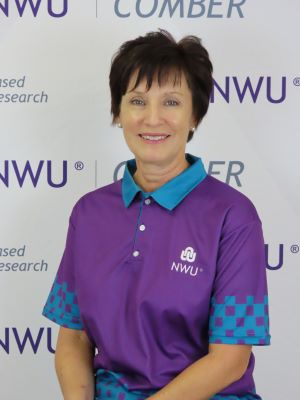
Mariëtte Koen is a Research Fellow for COMBER (Community Based Educational Research) Focus Area, Faculty of Education, North-West University (NWU), Potchefstroom, after retiring as Acting Director at the end of July 2025. With nearly 40 years of experience in the Early Childhood Development (ECD) sector, she has served as a foundation phase teacher, remedial teacher, educational psychologist, lecturer, and researcher in higher education. Her work focuses on action research and sustainable development in ECD, promoting quality and accessible early childhood education. She also supervised postgraduate students and co-edited three books on ECD, further strengthening her contribution to the field. Before joining NWU. She remains deeply committed to advancing the field and supporting the holistic development of young children. Explore Lesley’s work: ORCID, Google Scholar, Research Gate
This contribution is one of a series of short blog posts by presenters who will be sharing their work at the upcoming annual conference in Funchal, Madeira. Any views expressed in this post are those of the author(s) and do not necessarily reflect the official stance of their affiliated institution or EECERA.